 BTC
BTC  ETH
ETH  XRP
XRP SOL
SOL  DOGE
DOGE If you had a baby in 2025 or later, the federal government may owe your family money. Under a new program that went live on July 4, 2026, eligible children receive a one-time $1,000 deposit from the U.S. Treasury into a brand-new type of savings account. It is called a Trump Account, and more than 7 million children have already been signed up.
But the details matter. Not every child gets the $1,000, the money is locked up until age 18, and there is a tax bill waiting at the end. This guide covers how Trump Accounts work, who qualifies, how to open one, and how they compare with 529 and UTMA accounts.
What Is a Trump Account?
A Trump Account (formally a 530A account) is a new federal child savings account created under the One Big Beautiful Bill Act. The program officially launched on July 4, 2026, and accounts are administered through trumpaccounts.gov with the IRS handling enrollment.
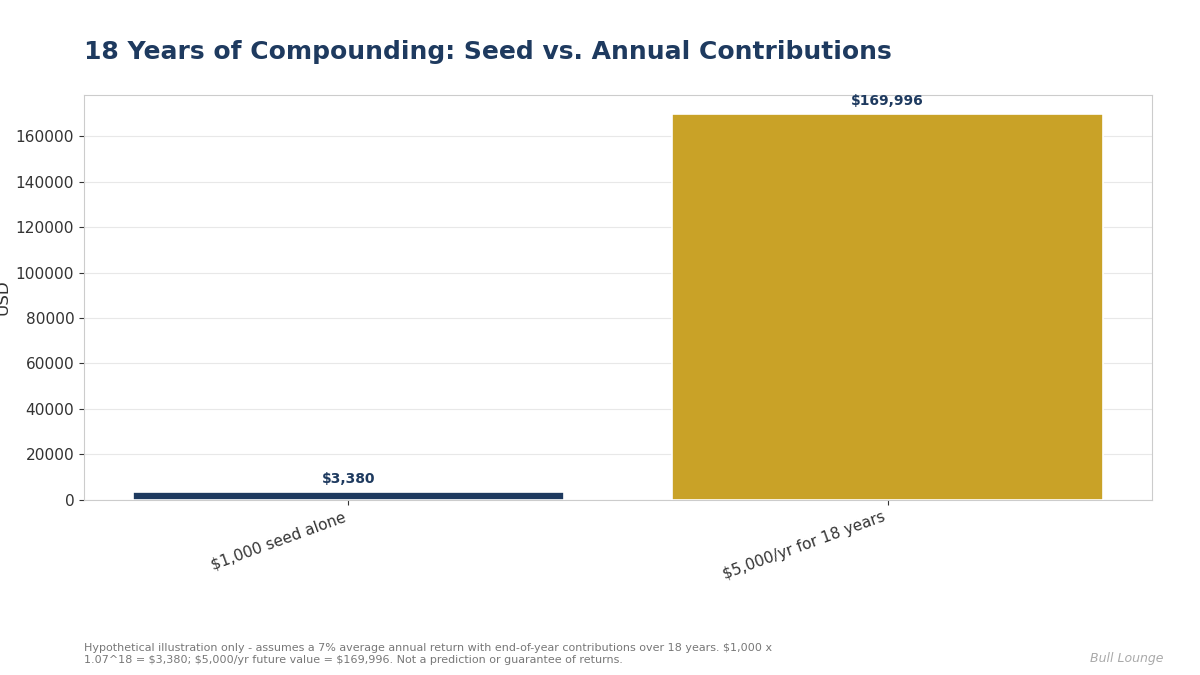
The account is owned by the child but administered by a parent or legal guardian until the child turns 18. Money in the account is invested in low-cost U.S. stock index funds and grows tax-deferred. The core idea is simple: start the compounding clock at birth instead of waiting until someone’s twenties or thirties to think about long-term savings.
Unlike a regular savings account, you cannot treat it like a piggy bank. Withdrawals are generally prohibited before the child turns 18.
Who Gets the $1,000 Baby Bonus?
This is the part most people care about, and the eligibility line is strict. A child qualifies for the one-time $1,000 federal seed deposit only if all of the following are true:
- Born between January 1, 2025 and December 31, 2028
- A U.S. citizen
- Has a valid Social Security number
The $1,000 is deposited once the account is activated. It does not count against the annual contribution limit.
What if your child falls outside that birth window? Any child under 18 with a Social Security number can still have a Trump Account opened for them. They just will not receive the federal seed money. The account itself, with its tax-deferred growth in index funds, is still available.
One more wrinkle: Michael and Susan Dell privately pledged $6.25 billion to the initiative. Under that pledge, some children age 10 or under born before 2025 in ZIP codes with a median income of $150,000 or less may receive $250. That is a private pledge, not a federal benefit, so its timing is not guaranteed by the tax code.
How to Open a Trump Account: Step by Step
Opening a Trump Account starts with the IRS, not your brokerage. Here is the process:
- Confirm eligibility. Verify the child’s birth date, U.S. citizenship, and Social Security number. For the $1,000 seed, the birth must fall between January 1, 2025 and December 31, 2028.
- File IRS Form 4547. A parent or legal guardian files the election online at trumpaccounts.gov. The form asks for dates of birth, Social Security numbers, and contact information for both the parent and the child. It can also be filed with a tax return or by mail.
- Wait for IRS validation. The IRS must validate and activate the election before any financial institution gets involved. Nothing is funded until this step clears.
- Complete setup with the account provider. After activation, the partner financial firm holding Trump Accounts (initially handled by BNY) contacts the family with login instructions to finish setting up the account.
- Receive the seed deposit. For eligible babies, the Treasury deposits the one-time $1,000 once the account is active.
- Add contributions. Family, friends, and employers can then contribute within the annual limits below.
The most common reason people miss out is never filing the form. The Form 4547 election is what starts the process.
Contribution Rules: How Much Can You Add?
Beyond the government’s seed money, anyone can contribute to a child’s Trump Account: parents, grandparents, relatives, friends, community groups, and employers. The combined limit from all private sources is $5,000 per child per year.
If an employer contributes through a 530A program, up to $2,500 of that $5,000 total can come from the employer. All private contributions are after-tax dollars with no upfront deduction. The tradeoff is tax-deferred growth in index funds until the child turns 18.

What Happens at Age 18 — and the Tax Bill
When the child turns 18, the Trump Account converts into a traditional IRA, and standard IRA rules take over from there. At that point the account holder can make penalty-free withdrawals for certain life expenses, such as college tuition, a first-time home purchase, or starting a business.
Here is the part many summaries skip: the tax treatment. Because the account becomes a traditional IRA, most of what comes out is taxed as ordinary income. Specifically, the government’s $1,000 seed deposit, any employer contributions, and all investment earnings are taxed as the child’s ordinary income when withdrawn. Personal after-tax contributions made by the family come back tax-free.
This matters for planning. The long tax-deferred compounding runway is the real benefit; the account is not a way to earn tax-free income. Families deciding how much of their own money to add should weigh this against a 529, where qualified education withdrawals are tax-free at the federal level.

Trump Account vs. 529 vs. UTMA: How They Compare
Most families choosing a child savings vehicle are deciding between three options. Here is how they stack up:
| Feature | Trump Account (530A) | 529 Plan | UTMA / Custodial Account |
|---|---|---|---|
| Primary purpose | Long-term wealth building; converts to a retirement account at 18 | Education savings (K-12 and college expenses) | General savings and investing for a minor |
| Who can open it | Parent/guardian files IRS Form 4547 for any child under 18 with an SSN | Anyone; account owner retains control | Adult custodian opens for a minor |
| Annual contribution limit | $5,000 per child per year from all private sources combined | High lifetime limits set by each state; no federal annual cap | No contribution limits |
| Tax treatment | After-tax contributions; tax-deferred growth; earnings taxed as ordinary income at withdrawal | After-tax contributions; tax-free growth and withdrawals for qualified education expenses | First portion of child’s unearned income taxed at child’s rate; account is taxable |
| Withdrawal rules | Generally locked until age 18, then traditional IRA rules apply | Penalty and taxes if withdrawn for non-education expenses | Can be used for the child’s benefit at any time |
| Control of the money | Child owns it; parent administers until 18 | Account owner keeps control and can change the beneficiary | Child takes full control at the age of majority |
| Government seed money | $1,000 one-time for children born 2025-2028 (U.S. citizens with SSN) | None | None |
The honest framing: a Trump Account is not a replacement for a 529 if your main goal is funding college. It is a separate, retirement-oriented bucket with a free $1,000 head start for eligible newborns.
Common Mistakes to Avoid
Assuming an older child gets the $1,000. Only children born between January 1, 2025 and December 31, 2028 qualify for the federal seed deposit. Older children can still have an account, but without the seed money.
Skipping the Social Security number requirement. No SSN, no account. The child must have a valid Social Security number, and citizenship is required for the seed deposit.
Expecting a tax deduction. Contributions are after-tax. There is no deduction the way there is with a traditional 401(k) or IRA contribution.
Counting on the Dell $250 as a sure thing. The $250 for some children age 10 or under in lower-income ZIP codes comes from a private pledge, not federal law. Treat it as a possible bonus, not a promised benefit.
Putting education money here instead of a 529. If the goal is college funding, a 529’s tax-free qualified withdrawals are usually the better fit. The Trump Account’s strength is decades of tax-deferred compounding ending in retirement savings.
Waiting to file. The process starts with the Form 4547 election. Filing sooner means the seed money and compounding start sooner.
The Bottom Line
If you have a child born between 2025 and 2028, claiming the $1,000 seed deposit is close to a no-brainer: it is federal money for filing a form. More than 7 million children have already been signed up, and the program is live now.
Beyond the bonus, think of the Trump Account as one bucket in a broader plan. It offers a uniquely long compounding runway and tax-deferred growth, but the money is locked until 18 and the earnings are eventually taxed as ordinary income. Pair it deliberately with the tools you already use, whether that is a 529 for education or a Roth IRA for yourself.
Not financial advice. Do your own research.